
Redokun: the DeepL alternative for manufacturing marketing teams

Redokun has DeepL built in, alongside ChatGPT and Google Translate. Upload an InDesign catalogue, Word manual or PowerPoint deck, pre-translate it, have colleagues and distributors review it in the browser, and download it in its original layout, in every language you sell in.
Translating one catalogue for a trade show? Use a Project Pass, with no subscription. Translating every month? A Subscription Plan gives your team unlimited documents.


Trusted by teams shipping materials in 5, 10 or 20+ languages


Is Redokun a good DeepL alternative?
Redokun is a translation management platform for manufacturing marketing teams that translate catalogues, datasheets and manuals into several languages. It has DeepL built in, alongside ChatGPT and Google Translate, and adds Translation Memory, a shared glossary, in-browser review for distributors and agencies, and downloads that keep your original InDesign, Word or PowerPoint layout.
Use DeepL on its own if you translate the occasional file into one or two languages. Use Redokun when the same documents go out in many languages, change whenever specs change, and need people outside your team to check them.
Translation engines: DeepL, ChatGPT and Google Translate on Subscription Plans; with a Project Pass, Redokun chooses the AI engine
File formats: 11, including InDesign (IDML), Word, PowerPoint, Excel and XLIFF
Languages: 130+
Pricing: Project Pass €120 ($156) one-off for up to 10 documents, or Subscription Plans from €300 ($390) a month with unlimited documents
Free trial: 14 days, 20,000 exportable words, no credit card
DeepL translates files. Manufacturers need to run translation projects.
DeepL is one of the best translation engines, and its Translation Flow add-on now brings a workflow to its Business and Enterprise plans. For a manufacturing marketing team, the question isn't which engine to use. It's how you get a catalogue into eight languages, reviewed by distributors, without anyone rebuilding the layout. That takes:
Importing InDesign, Word, PowerPoint and Excel files as they are, with no copy-pasting into spreadsheets
Checking translated layouts, including tables, callouts, diagrams and part numbers, before they go to print
One glossary for part names, safety wording and brand terms, applied in every language
A shared place where distributors, external translators and technical writers review, instead of email threads
Seeing which of your 10, 20 or 30 languages are still in progress before a trade show or launch
Redokun has DeepL, ChatGPT and Google Translate built in, so you can pre-translate a whole document in seconds, keep its layout and run the review in one place, without a localisation specialist on staff.
Redokun vs DeepL: feature comparison
Redokun
DeepL


or
Workspace from €300 a month for the team
DeepL plans and features checked on 29 October 2026 against DeepL's Pro plans, Translation Flow and document translation pages. Prices exclude add-ons.
How Redokun works with DeepL
DeepL is built into Redokun. This is how a catalogue goes from one language to many:
Drop in an InDesign catalogue, PowerPoint sales deck, Excel spec sheet, Word manual or XLIFF export as it is. No copying text into a spreadsheet first.

Every sentence gets a machine translation, checked against your Translation Memory and a glossary that fixes part names, technical terms and brand wording. On Subscription Plans you choose the engine; with a Project Pass, Redokun chooses it. Your team reviews instead of translating from a blank page.

Everyone works in the same browser-based Web Editor, leaves comments and tags each other. On Subscription Plans, Redokun also suggests glossary terms from your document.


Run every translation project in one place
Your team can start without training or a localisation specialist.
1
Keep technical terms consistent in every market
A glossary fixes the terms you can't afford to get wrong, such as part names, safety wording, regulatory phrasing and brand vocabulary, so every translator works from the same definitions. On Subscription Plans, Redokun suggests up to 15 glossary terms from each document, so you don't build the list by hand.
Start translating

2
Translate and review in the same place
Replace the email threads with your distributors. In-house reviewers, regional partners and external translators work in the same document, leave comments and tag each other, and you see who has finished what.
Start translating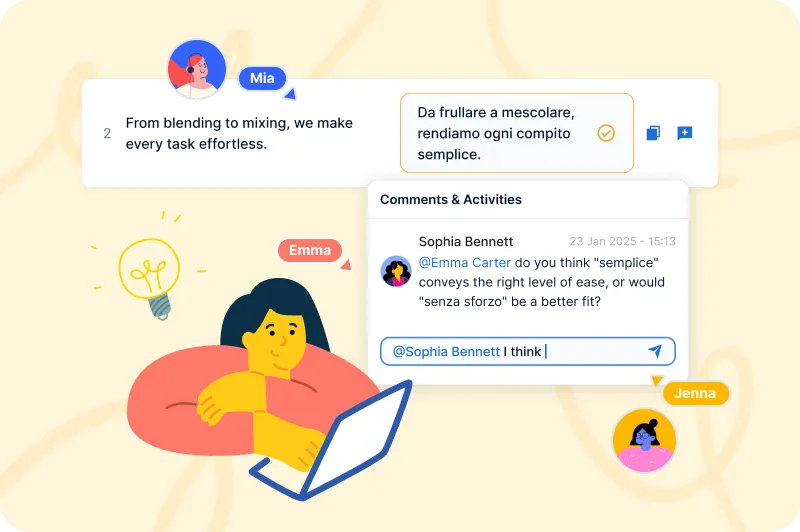
3
Update every language in minutes when specs change
Product specs and manuals change. With Quick Revisions, upload the new version and Redokun carries over every unchanged sentence in every language. Only new or edited text needs translating and reviewing.
Start translating
4
Download with layout, tables and diagrams intact
Nobody rebuilds an InDesign catalogue or spec sheet by hand. Upload the original file and get back a formatted version in each language, with tables, callouts and diagrams in place.
Start translating
5
Reuse approved translations across product lines
Every project adds to your Translation Memory. Reviewers get suggestions for text they've already approved, so boilerplate, part descriptions and compliance wording are never translated twice.
Start translating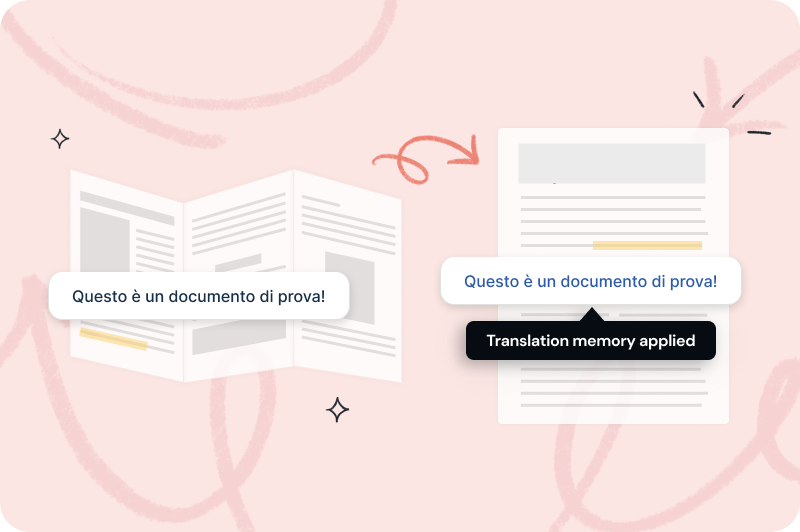









Frequently asked questions


Redokun includes DeepL and adds the project management a team needs to translate documents into many languages. Manufacturing marketing teams usually translate catalogues, datasheets and manuals into eight or more languages. Redokun lets them track progress per language, keep the layout with automatic file formatting, reuse approved sentences through Translation Memory, keep technical terms consistent with a glossary, and have colleagues, distributors and agencies review in the same place.
It depends on what you translate. For quick text translation, Google Translate covers more languages, and ChatGPT often handles marketing tone better. For documents that go out in many languages, such as catalogues, datasheets and manuals, Redokun is a better fit. Its Subscription Plans have all three engines built in, and every plan adds Translation Memory, glossary control and review workflows.
No. A Project Pass costs €120 ($156) once and covers one project for 30 days: up to 10 documents and 50,000 words, with the AI engine chosen by Redokun. Teams that translate every month use a Subscription Plan, from €300 ($390) a month, and choose between DeepL, ChatGPT and Google Translate. See the pricing page for details.
Google Translate is free for text and simple documents. DeepL's free plan translates one file at a time on its website within usage limits, and paid plans start at €7.49 a month for 3 file translations. Redokun isn't free, but its 14-day trial includes 20,000 exportable words with no credit card, enough to translate a full datasheet set and see the result in your own layout.
On Subscription Plans, Redokun has DeepL built in, along with ChatGPT and Google Translate, inside a workflow made for documents. You upload an InDesign, Word or PowerPoint file, pre-translate it with DeepL, have colleagues or distributors review it in the browser, and download it with tables, diagrams and layout intact.
DeepL offers Translation Flow, a paid add-on for its Business and Enterprise plans. It adds glossaries, style rules, Translation Memory and expert review inside tools such as Word, Google Drive and SharePoint. Redokun is a separate workspace made for manufacturers' translation projects: each language's progress in one place, translator seats for reviewers included, and unlimited documents on Subscription Plans.
Yes. Redokun imports IDML files exported from InDesign, translates the text, and gives you back an IDML in the original layout for each language. When a spec changes, you upload the new version and only the changed sentences need translating.
None of them is best for every language pair or type of content. DeepL is strong in the languages it supports, Google Translate covers more languages, and ChatGPT can be better for marketing copy. On Subscription Plans you choose the engine per project, and your glossary keeps technical terms consistent whichever one you use.